Explore expert qPCR gene expression resources covering gene expression profiling, qPCR arrays, RNA-seq validation, lncRNA analysis and biomarker discovery.
At AnyGenes®, we support researchers working with complex biological questions, challenging samples and targeted transcript analysis. Our resources are designed to help you better understand qPCR workflows, improve assay reliability and choose the right approach for your gene expression studies.
Whether you are confirming RNA-seq results, studying immune or cancer pathways, investigating lncRNAs or profiling biomarker expression, this resource hub brings together practical insights, scientific articles and peer-reviewed research using AnyGenes® solutions
Stay informed with educational articles focused on practical qPCR applications, transcript analysis and research workflows.
These resources are written for scientists who need clear guidance on assay design, sensitivity, reproducibility and data interpretation, without losing sight of the biological question behind the experiment.
lncRNA Analysis
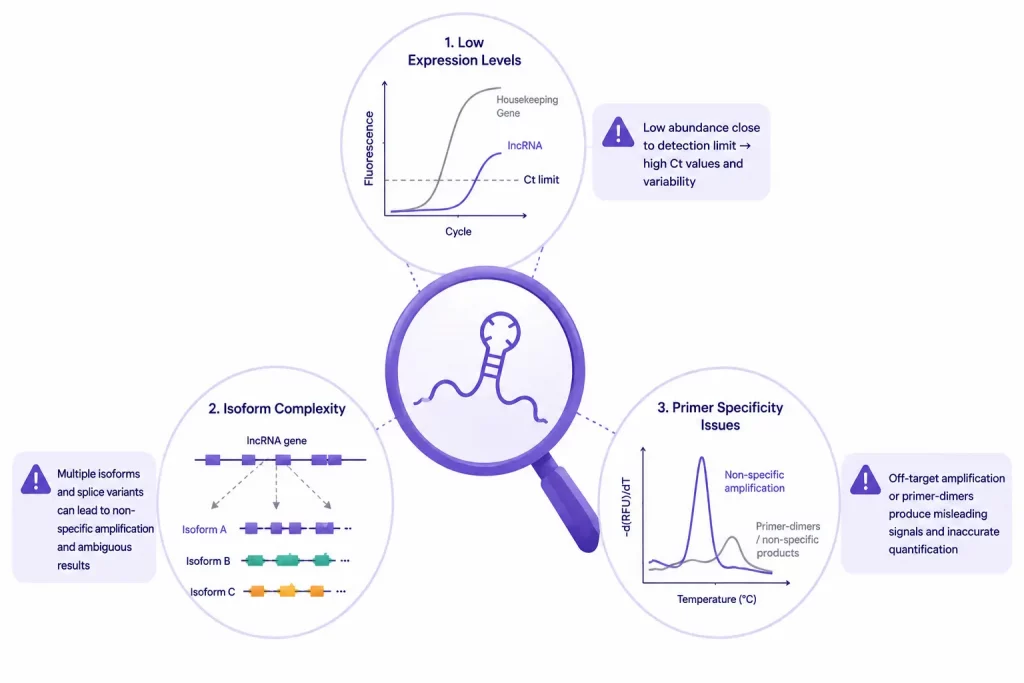
Working with lncRNAs is rarely straightforward. Many long non-coding RNAs are expressed at low levels, show tissue-specific patterns or exist as complex isoforms, making qPCR analysis more sensitive to primer design, RNA quality and workflow conditions.
This article explains the most common reasons why lncRNA qPCR may produce weak, inconsistent or non-specific results, and how optimized assays and validation strategies can help improve confidence in your data.
RNA-seq Validation
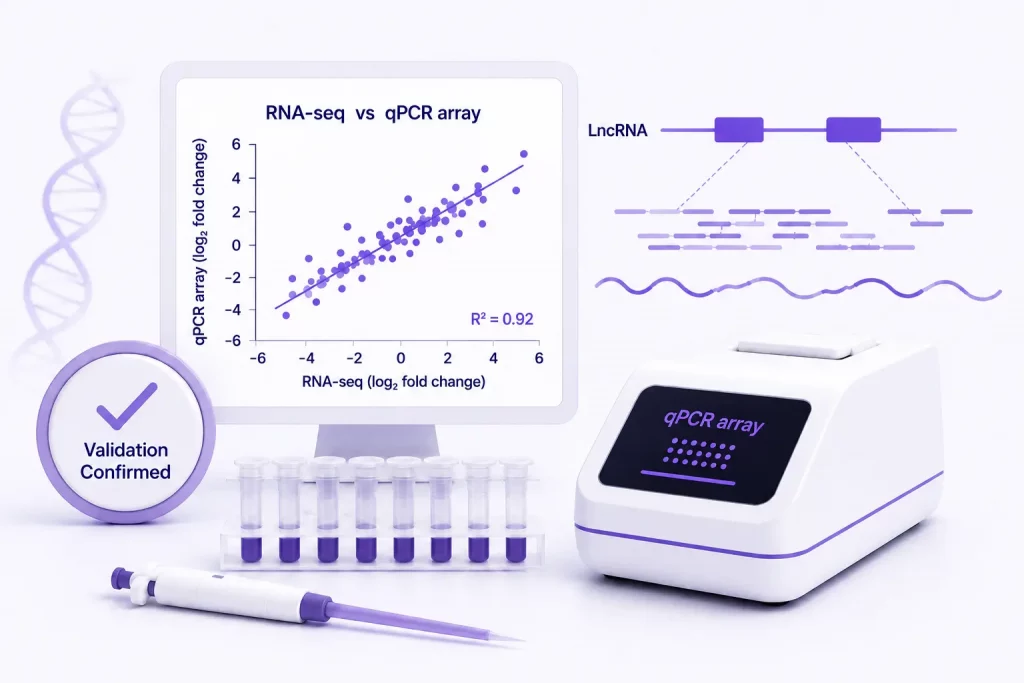
RNA-seq is a powerful discovery method, but selected findings often need to be confirmed with a targeted and sensitive approach.
This guide explains how qPCR arrays can help researchers validate RNA-seq results, confirm relevant lncRNA signals and strengthen the interpretation of transcriptomic data, especially when expression levels are low or sample material is limited.
Read article →
qPCR Workflow
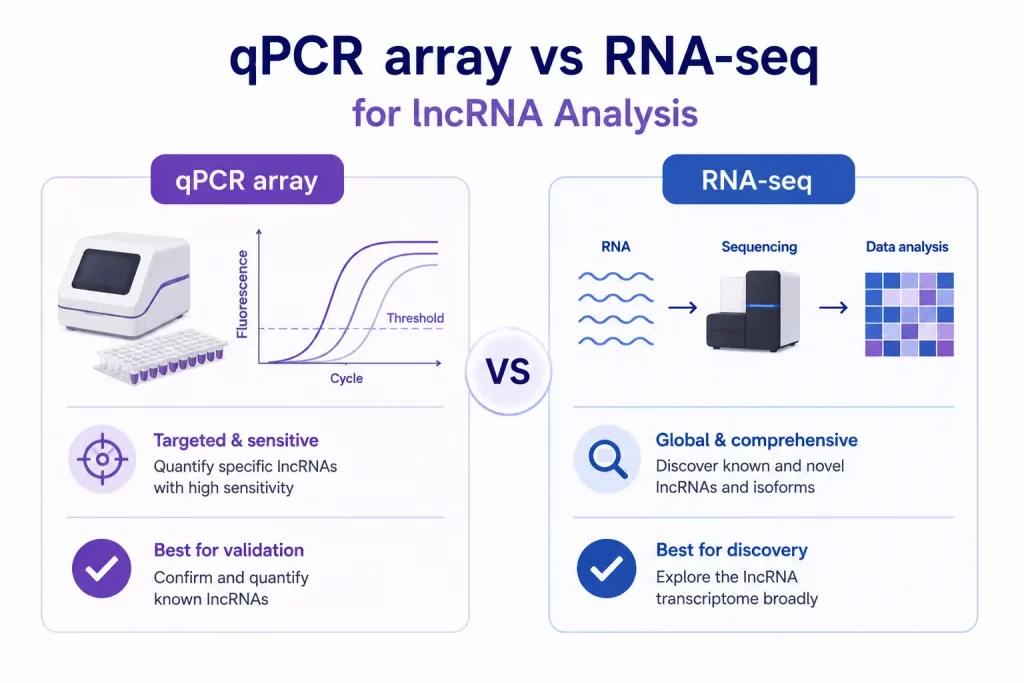
RNA-seq and qPCR do not answer exactly the same question. RNA-seq is well suited for broad transcript discovery, while qPCR and qPCR arrays are often used to confirm selected targets, compare expression across samples and focus on pathways or biomarker candidates.
This article helps researchers understand when each method is most useful and how both approaches can complement each other in lncRNA studies.
Read article →
Gene expression analysis is used across many research fields, from immunology and cancer biology to epigenetics and biomarker discovery.
Browse resources by scientific area to better understand how targeted qPCR workflows can support specific biological questions, pathway studies and molecular profiling projects.
Immunology
Innate lymphoid cells: functions and mechanisms
Innate lymphoid cells contribute to immune regulation, inflammation, tissue repair and protective responses at barrier surfaces.
This resource introduces their main functions and explores how gene expression analysis can help researchers study immune activity, cell signaling and inflammatory responses in different biological contexts.
Biomarker Discovery
Immune checkpoints qPCR resources for biomarker discovery
Immune checkpoint pathways are central to cancer immunology, immune escape and therapeutic response research.
Learn how targeted gene expression analysis can help monitor checkpoint-related markers, explore pathway activation and support biomarker-focused studies in oncology and immunology.
Technology
SpeAmp® system for sensitive qPCR gene expression analysis
Some experiments start with limited RNA input, rare transcripts or samples where signal detection is challenging.
The SpeAmp® system is designed to support sensitive qPCR analysis when target abundance is low, helping researchers study selected genes and pathways from precious or difficult biological material.
Gene Regulation
Epigenetic regulation and gene expression
Epigenetic mechanisms influence how genes are activated, silenced or fine-tuned across cell types, developmental stages and disease states.
This article explains how epigenetic regulation shapes transcriptional programs and why gene expression profiling is useful for studying cellular identity, differentiation and disease-related molecular changes.
Cancer Research
The tumor microenvironment
The tumor microenvironment is shaped by interactions between cancer cells, immune cells, stromal components, cytokines and signaling pathways.
Explore how targeted gene expression analysis can help researchers investigate tumor progression, immune activity, pathway regulation and biomarker expression within complex cancer samples.
lncRNA Analysis
Emerging Roles of lncRNAs in gene expression regulation
Long non-coding RNAs are increasingly recognized as important regulators of gene expression, cell behavior and disease-associated pathways.
This resource explores how lncRNAs contribute to molecular regulation and why sensitive, targeted expression analysis is often needed to study their biological roles effectively.
AnyGenes® solutions have been used in peer-reviewed studies across cancer research, transcriptomics, inflammation, biomarker discovery, immune signaling and gene regulation.
These publications help demonstrate how targeted gene expression analysis can support the investigation of disease mechanisms, molecular pathways and biologically relevant transcriptional changes.
Gene Expression Profiling in Non-Small Cell Lung Cancer
This study used gene expression profiling to identify molecular differences associated with long-term survival in non-small cell lung cancer.
The research highlights how transcript-focused analysis can help reveal expression patterns linked to cancer biology, prognosis and patient stratification.
Cancer Biol Med. 2020 May 15;17(2):444-457. DOI: 10.20892/j.issn.2095-3941.2019.0363
circRNA regulation in glioblastoma invasion and migration
This publication investigated the role of circPTK2 in glioblastoma biology, with a focus on invasion, migration and miRNA-related regulatory mechanisms.
The study illustrates how gene expression analysis can contribute to a better understanding of complex regulatory networks in aggressive tumors.
Neuropsychiatr Dis Treat. 2021 Aug 21:17:2767-2774. DOI: 10.2147/NDT.S297108
CD147 and tumor lymphangiogenesis in melanoma
This research explored molecular mechanisms connecting CD147 expression with tumor lymphangiogenesis and melanoma progression.
It shows how targeted transcript analysis can help researchers investigate cancer-associated signaling and interactions within the tumor microenvironment.
Cancers (Basel). 2021 Sep 28;13(19):4859. DOI:10.3390/cancers13194859
SARS-CoV-2 RNA Environmental Analysis
This study examined airborne SARS-CoV-2 RNA detection during lockdown conditions using molecular and transcriptomic approaches.
The work highlights the value of sensitive RNA analysis workflows in environmental monitoring and infectious disease-related research.
Environ Res. 2021 Apr:195:110863. DOI:10.1016/j.envres.2021.110863
Transcriptomic Regulation in Cornelia de Lange Syndrome
This publication investigated how cohesin redistribution affects transcriptome organization in genetic disease models.
The findings show how gene expression analysis can support research into transcriptional dysregulation and disease-associated molecular mechanisms.
Nat Commun. 2021 Jul 27;12(1):4551. DOI: 10.1038/s41467-021-24808-z
EMMPRIN/CD147 and Oral Tumor Progression
This study explored the role of EMMPRIN/CD147 in regulating urokinase-type plasminogen activator and oral tumor progression.
The research contributes to a better understanding of molecular pathways involved in tumor invasion, extracellular remodeling and cancer progression.
BMC Cancer. 2012 Mar 23:12:115. DOI: 10.1186/1471-2407-12-115
Inflammatory Transcriptomic Changes in the 5XFAD Mouse Model
Researchers investigated transcriptomic inflammation changes associated with Alzheimer’s disease progression and therapeutic response in the 5XFAD mouse model.
This publication highlights how gene expression profiling can support the study of neuroinflammation, disease progression and pathway-level responses.
Genes (Basel). 2021 Aug 26;12(9):1315. DOI: 10.3390/genes12091315
AnyGenes® qPCR and qPCR array solutions have been used in peer-reviewed studies across cancer research, immunology, transcriptomics, inflammation and biomarker discovery.
AnyGenes® supports researchers working across a wide range of gene expression applications, from discovery validation to focused pathway analysis.
Our qPCR and qPCR array solutions are particularly relevant for studies involving:
qPCR gene expression resources include educational guides, workflow explanations, troubleshooting articles, application notes and scientific publications that help researchers design, perform and interpret targeted transcript analysis. They can support decisions around assay selection, RNA quality, primer specificity, qPCR arrays, RNA-seq validation and biomarker-focused studies .
qPCR is used to measure the expression of selected genes or transcripts across biological samples. It is commonly applied when researchers need a sensitive, targeted and quantitative method to compare expression patterns, validate findings or study specific pathways. In many workflows, qPCR is used after broader discovery methods such as RNA-seq to confirm key results with a focused assay.
qPCR is often used to confirm selected RNA-seq findings with a targeted approach. It helps researchers verify expression changes, validate low-abundance transcripts and strengthen confidence in biologically relevant results. This is especially useful when working with lncRNAs, biomarker candidates or genes involved in specific pathways.
lncRNA qPCR can be challenging because many lncRNAs are expressed at low levels, show tissue-specific expression and may have complex isoforms. Reliable analysis depends on careful assay design, primer specificity, RNA quality, appropriate controls and optimized workflow conditions.
RNA-seq is useful for broad transcriptome discovery, while qPCR arrays are better suited for targeted validation, pathway-focused analysis and biomarker studies. Researchers often use RNA-seq to identify candidate transcripts, then use qPCR arrays to confirm and compare selected genes across larger sample sets or focused biological conditions.
qPCR arrays allow researchers to measure selected genes or pathways across multiple samples with high sensitivity and reproducibility. This makes them useful for confirming candidate biomarkers, comparing expression profiles, studying disease-associated signatures and exploring pathway-level changes in defined research contexts.
AnyGenes® provides qPCR and qPCR array solutions for gene expression analysis, RNA-seq validation, lncRNA research, biomarker discovery, immune signaling, cancer research and low-expression transcript detection. These solutions are designed to help researchers generate focused, reliable expression data from complex biological samples and specific scientific questions.
Choosing the right qPCR approach depends on your research question, sample type, RNA quality, target abundance and the level of biological detail you need. Whether you are validating RNA-seq results, analyzing lncRNAs, profiling immune or cancer pathways, or working with low-expression transcripts, AnyGenes® can help you identify the most relevant qPCR or qPCR array strategy for your project. Our team can support you in selecting targeted gene panels, improving workflow sensitivity and building an approach adapted to your samples, targets and scientific objectives.