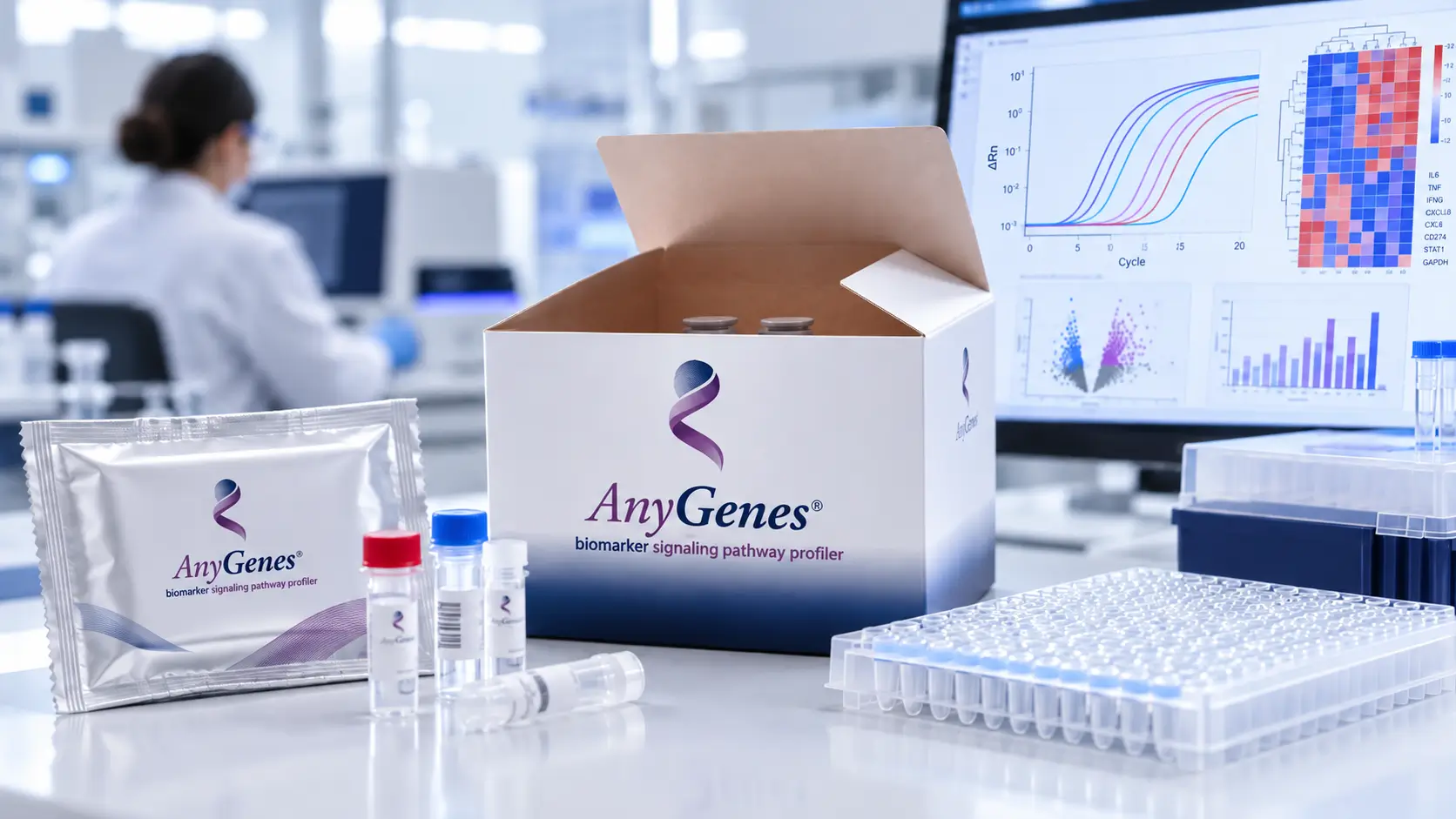
In Vitro Drug Development
Characterize experimental drug responses, cellular effects and associated molecular changes using cell-based models and targeted gene expression approaches.
Explore in vitro drug development


AnyGenes provides biomarker services for research projects requiring targeted molecular analysis, gene expression profiling, experimental drug-response studies, DNA methylation analysis or interpretation of high-throughput molecular data.
Our scientific team can help define an approach adapted to your biological question, available samples or datasets, candidate targets and experimental objectives.
From experimental models and candidate biomarkers to targeted molecular analysis and data interpretation.
Approaches can be selected according to your research question, biological material and available data.
Discuss your samples, candidate genes, molecular data or experimental objectives with our scientific team.
Biomarker-oriented projects can require different experimental and analytical approaches. Explore the AnyGenes service that best matches your current research question, from cell-based drug-response studies to candidate validation, epigenetic analysis and molecular data interpretation.
Characterize experimental drug responses, cellular effects and associated molecular changes using cell-based models and targeted gene expression approaches.
Explore in vitro drug development
Evaluate candidate biomarkers using targeted qPCR, pathway-focused SignArrays® and customized gene expression panels adapted to your research objectives.
Explore biomarker validation services
Examine DNA methylation and epigenetic regulation using targeted molecular approaches adapted to selected genomic regions and biological questions.
Explore DNA methylation analysis
Analyze genomic and transcriptomic datasets using statistical and bioinformatics approaches adapted to gene expression, molecular signatures and research objectives.
Explore high-throughput data analysisAnyGenes can combine in vitro experimental models with targeted molecular analysis to investigate treatment-associated biological responses, mechanisms of action and candidate biomarker signatures.
Depending on the research question, a project may integrate cell-based drug-response studies, targeted gene expression analysis, pathway-focused profiling and data analysis.
Research context: these approaches are intended to support experimental and translational research. Molecular response patterns or candidate biomarker signatures identified in research models do not, by themselves, establish clinical efficacy, clinical utility or patient-level treatment response.
AnyGenes combines its own molecular laboratory platform with dedicated data analysis capabilities to support biomarker-oriented research from experimental material to molecular data interpretation. The approaches used can be adapted to the biological question, available samples, molecular targets and existing datasets.
AnyGenes operates its own laboratory platform and can integrate complementary molecular approaches according to project requirements.
Dedicated analytical workflows can support the interpretation of genomic and transcriptomic data and help identify molecular patterns or candidate targets for further investigation.
Project-adapted approach: the combination of laboratory technologies and analytical methods depends on the research objective, biological material and data already available. Not every technology is required for every biomarker project.
Biomarker research projects can start from biological material, extracted nucleic acids, candidate molecular targets or existing datasets. The appropriate workflow depends on sample characteristics, available material and the scientific question being addressed.
Tissue-derived material can be considered for molecular analysis according to sample condition, available quantity and the requirements of the selected assay.
Cell-based experimental models can support treatment-response studies, gene expression analysis and targeted investigation of molecular pathways.
Peripheral blood mononuclear cells can be incorporated into appropriate molecular research workflows depending on the biological question and experimental design.
Formalin-fixed paraffin-embedded material may be considered for compatible molecular analyses, taking into account nucleic acid quality, quantity and assay requirements.
Projects may begin directly from extracted RNA or DNA when material has already been prepared for downstream molecular analysis.
Genomic or transcriptomic datasets can provide a starting point for statistical analysis, candidate prioritization and targeted molecular follow-up.
Selected genes, transcripts, pathways or molecular signatures can provide a starting point for targeted investigation or validation.
Projects can also begin with experimental compounds, treatment conditions or preliminary observations requiring molecular follow-up.
Sample suitability: compatibility with a specific workflow depends on the nature, quality and quantity of the biological material. These parameters should be reviewed before defining the experimental strategy.
The research question determines which laboratory and data-analysis capabilities should be combined with more focused approaches for candidate investigation, epigenetic studies and targeted gene expression analysis.
Profile selected genes, signaling pathways and transcriptional signatures using individual qPCR assays, ready-to-use SignArrays® or customized panels.
Study selected methylation patterns and epigenetic changes in the context of defined molecular or biological research questions.
Apply project-adapted statistical and bioinformatics approaches to genomic or transcriptomic datasets to identify patterns, candidate genes and molecular signatures.
Molecular and biomarker-oriented approaches can support research across multiple biological fields. The most appropriate strategy depends on the experimental model, available data and research objective.
Investigate molecular changes associated with tumor biology, treatment exposure, proliferation, cell death and disease-related transcriptional signatures.
Study inflammatory mediators, cytokine-related responses, immune-associated pathways and selected molecular signatures.
Analyze molecular responses associated with vascular, endothelial, cardiac or pulmonary research models.
Investigate gene expression and molecular responses associated with neuroinflammation, oxidative stress and cell survival.
Investigate methylation-associated molecular changes and selected epigenetic mechanisms in the context of defined biological or disease-related research questions.
Compare cellular and molecular responses across experimental treatment conditions using project-adapted in vitro approaches.
The level of support can vary by service and project, from receiving biological material or molecular data to targeted analysis, data processing and biological interpretation.
Review the research question, available material, molecular targets and expected comparisons.
Start from biological material, extracted nucleic acids or an existing molecular dataset according to the project.
Apply the selected experimental approach according to the biological question and project requirements.
Process and structure experimental or high-throughput data using analytical methods appropriate to the study design.
Compare experimental conditions, examine molecular patterns and organize results for interpretation in the context of the research question.
Flexible level of support: projects do not necessarily require all five stages. AnyGenes® support can be adapted according to the material, data and analyses already available when the project begins.
AnyGenes technologies have been incorporated into independent peer-reviewed research workflows across transcriptomics, cancer biology, cardiovascular and pulmonary research and biomarker-oriented studies.
Selected transcriptomic findings associated with Cornelia de Lange syndrome were investigated using customized AnyGenes qPCR panels.
Technology:
Custom gene expression qPCR panels
Targeted lncRNA profiling was integrated into research investigating methotrexate response and resistance in colorectal cancer cells.
Technologies:
Human LncRNA and Cancer SignArray® · StaRT · analysis software
A pathway-focused qPCR approach was used to investigate gene expression associated with endothelial dysfunction in pulmonary arterial hypertension.
Technologies:
Endothelial Dysfunction SignArray® · StaRT · Perfect Master Mix
Common questions about selecting an AnyGenes molecular or biomarker research service.
AnyGenes provides complementary services covering in vitro drug-response studies, biomarker identification and targeted validation, DNA methylation analysis and high-throughput molecular data analysis. The appropriate service depends on the research question and the type of material or data already available.
Yes. Depending on the project, candidate biomarkers may first be identified or prioritized from experimental data, transcriptomic datasets, pathway analysis or published evidence, then investigated using targeted approaches such as qPCR and customized gene expression panels.
Yes. Existing genomic or transcriptomic data can provide a starting point for candidate prioritization, statistical analysis and targeted follow-up. The subsequent strategy depends on the dataset, research objective and selected candidates.
Yes. Personalized SignArrays® can be designed around selected genes, signaling pathways, species and research objectives. Customized panels can support targeted biomarker studies and follow-up of selected transcriptomic findings.
The most appropriate service depends on your starting point. A project may begin with an experimental compound, biological samples, candidate genes, methylation targets or a molecular dataset. Sharing your research objective and available material allows the AnyGenes® scientific team to discuss an appropriate next step.
Tell us about your biological question, available samples, candidate genes, experimental compounds or molecular dataset. Our scientific team can help identify an appropriate experimental or analytical strategy for your research objectives.