Antifungal Response – Signaling Pathways and Biomarker Analysis
What is the antifungal response?
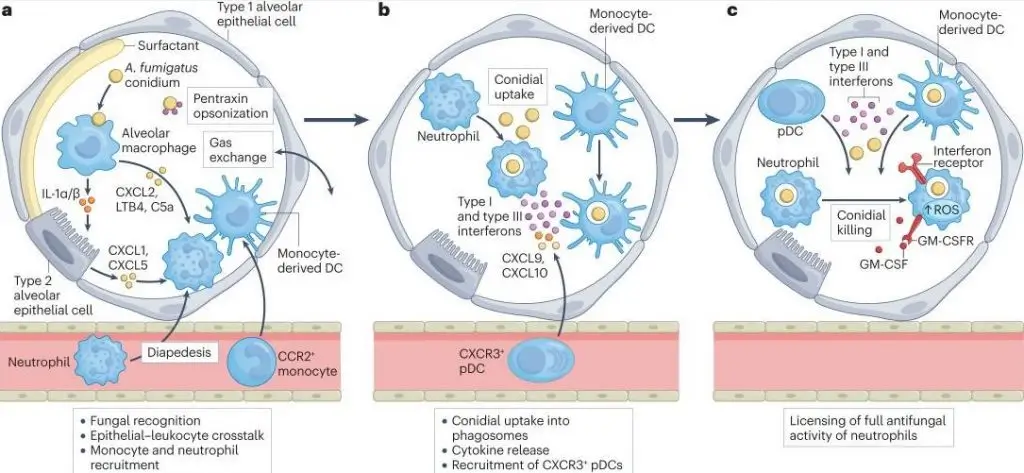
The antifungal response is a coordinated immune defense mechanism that enables the host to detect, control, and eliminate fungal pathogens. This response involves both innate and adaptive immunity, activated through the recognition of fungal components by pattern recognition receptors (PRRs).
Immune cells such as macrophages, neutrophils, and dendritic cells detect fungal cell wall components, including β-glucans and mannans, triggering intracellular signaling pathways. These cascades activate transcription factors that regulate the expression of genes involved in inflammation, immune defense, and antifungal activity.
The antifungal response leads to the production of cytokines, chemokines, and antimicrobial molecules that coordinate immune cell recruitment and pathogen clearance. Understanding these signaling mechanisms is essential for studying host–fungal interactions and immune dysregulation in infectious diseases.
Antifungal response pathway activity can be efficiently assessed through transcriptional profiling of immune receptors, cytokines, and antifungal effector genes, enabling characterization of immune activation and host defense mechanisms.
NF-κB and MAPK pathways regulate antifungal gene expression
Cytokines and immune cells coordinate fungal clearance
Gene expression profiling enables analysis of antifungal immune activation
Key cellular and molecular players in antifungal response
Several immune components contribute to antifungal defense.
Pattern recognition receptors (PRRs)
PRRs such as Dectin-1 and Toll-like receptors recognize fungal cell wall components, including β-glucans and mannans. Their activation initiates signaling pathways that regulate inflammation and antifungal immunity.
Cytokines and chemokines
Cytokines such as IL-1, IL-6, IL-17, and TNF, as well as chemokines, coordinate communication between immune cells and regulate antifungal responses.
Immune cells
Macrophages and neutrophils engulf and destroy fungal pathogens through phagocytosis
Dendritic cells present fungal antigens and activate adaptive immunity
T cells orchestrate targeted immune responses
Natural killer (NK) cells contribute to the elimination of infected cells
Signaling pathways involved in antifungal response
Antifungal immune responses are mediated by intracellular signaling cascades activated upon fungal recognition.
These pathways activate transcription factors that induce gene expression programs involved in immune defense, inflammation, and antifungal activity.
The regulation of these signaling pathways is essential to ensure effective pathogen clearance while preventing excessive inflammation
Innate and adaptive immunity in antifungal defense
The antifungal response involves two complementary arms of the immune system.
Innate immunity
The innate immune system provides a rapid, non-specific response to fungal invasion. PRRs detect fungal structures and activate signaling pathways that initiate inflammation and pathogen clearance.
Adaptive immunity
Adaptive immunity provides a more specific and long-lasting response. T cells differentiate into specialized subsets (e.g., Th17 cells) that are particularly important for antifungal defense, while B cells produce antibodies that enhance pathogen elimination
The role of antimicrobial mechanisms
Antifungal defense relies on multiple effector mechanisms, including:
production of reactive oxygen species (ROS)
secretion of antifungal peptides
phagocytosis and intracellular killing
cytokine-mediated immune activation
These mechanisms work together to limit fungal growth and prevent dissemination
Therapeutic applications and clinical relevance
Understanding antifungal response signaling pathways is critical for developing new therapeutic strategies.
The antifungal response is an immune defense mechanism that detects and eliminates fungal pathogens through coordinated signaling pathways and immune cell activation.
Which receptors detect fungi?
Pattern recognition receptors such as Dectin-1 and Toll-like receptors detect fungal components and initiate immune signaling pathways.
Which signaling pathways are involved in antifungal response?
Key pathways include NF-κB, MAPK, and C-type lectin receptor signaling pathways.
How can antifungal response be studied experimentally?
It can be analyzed through gene expression profiling of cytokines, immune receptors, and antifungal genes using qPCR arrays.
Which immune cells are involved
Macrophages, neutrophils, dendritic cells, T cells, and NK cells play essential roles in antifungal immunity.
Antifungal response biomarker list
You can check the biomarker list included in this pathway, see below:
Looking for more answers? Visit our Help & FAQ section to find detailed informations about our products, services, and technical support.
Bibliography
1. Lionakis MS, et al. Immune responses to human fungal pathogens and therapeutic prospects. Nat Rev Immunol. (2023) Jul;23(7):433-452.
2.Romani L. Immunity to fungal infections. Nature Reviews Immunology.(2011)11(4), 275-288.
3. Lionakis, Netea MG. Candida and host determinants of susceptibility to invasive candidiasis. PLoS Pathogens. (2013)9(1), e1003079.
Need pricing information or distributor details?
For quotations, product information, or project discussions, please contact our team at
[email protected].