Hi, Continue visiting your profile
user

Login

Email

Password

Create account
Forget password
AnyGenes
  • email login

LncRNA qPCR assays for accurate RNA expression analysis

LncRNA qPCR assays are designed to quantify long non-coding RNA expression with high specificity, supporting RNA-seq validation, biomarker research and focused gene expression studies.

Because lncRNAs are often expressed at low levels and may present complex transcript structures, reliable analysis requires carefully designed and experimentally validated qPCR assays.

Validated lncRNA primers 96- and 384-well qPCR arrays RNA-seq validation Biomarker research
LncRNA qPCR assays for long non-coding RNA expression analysis and RNA-seq validation

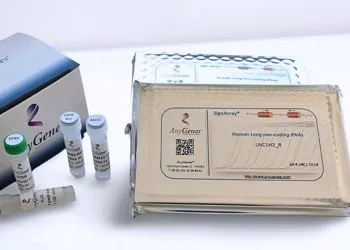
Validated lncRNA qPCR assays from AnyGenes®

AnyGenes® provides validated lncRNA qPCR assays, primer sets and qPCR array formats to support accurate expression analysis, RNA-seq validation and biomarker-focused research.

Validated assay design

Primer design optimized for specificity, with exon-exon junction targeting whenever possible.

Flexible formats

Available as individual primer sets, 96-well arrays, 384-well arrays or custom qPCR panels.

Low-expression targets

Designed to support reliable detection of low-abundance and structurally complex lncRNA targets.

RNA-seq validation

Useful for confirming selected lncRNA candidates identified by transcriptomic screening.

Challenging samples

Compatible with workflows involving limited RNA, FFPE samples, LCM samples or rare biological material.

Scientific support

Support from assay selection to experimental design and qPCR data interpretation.

Why are lncRNA qPCR assays technically challenging?

Long non-coding RNAs present specific analytical challenges compared with protein-coding genes. Their expression levels are often low, their transcript structures can be complex, and some lncRNAs overlap with coding genes or nearby genomic regions that may affect assay specificity.

Low abundance

Many lncRNAs are expressed at low levels, requiring sensitive detection and optimized qPCR workflows.

Multiple transcript isoforms

Transcript diversity can complicate primer design and make qPCR result interpretation more difficult.

Genomic overlap

Some lncRNAs overlap with protein-coding genes or related genomic regions, increasing the risk of cross-amplification.

Important point: reliable lncRNA quantification requires careful primer design, experimentally validated assays and appropriate qPCR workflow optimization, especially for low-input, degraded or complex samples.

How to analyze low-expression lncRNAs by qPCR

Low-expression lncRNAs can be difficult to detect with standard qPCR workflows, especially when working with limited RNA input, FFPE samples, LCM samples or single-cell material.

cDNA pre-amplification can be used before qPCR analysis to improve signal detection when transcript abundance is low or sample availability is limited.

SpeAmp® qPCR pre-amplification system

The SpeAmp® system is designed to support the detection of low-abundance RNA targets while maintaining reproducible qPCR workflows for rare or limited samples.

Workflow note: SpeAmp® can support lncRNA qPCR studies by improving detection of weak signals, enabling low-input sample analysis and strengthening selected RNA-seq validation workflows.

Validated lncRNA qPCR assays for reliable results

AnyGenes® lncRNA qPCR assays are developed to support reliable quantification of long non-coding RNAs across a range of experimental contexts, including complex targets and challenging sample types.

These assays are designed with features that support reproducible gene expression analysis:

  • ready-to-use or customizable formats;
  • optimized primer design for specific lncRNA targets;
  • exon-exon junction targeting whenever possible;
  • reduced risk of genomic DNA amplification;
  • compatibility with limited or degraded RNA samples;
  • optimized use with AnyGenes® qPCR reagents, including Perfect Master Mix SYBR® Green.

Together, these features help researchers quantify low-expressed or structurally complex lncRNAs with greater confidence.

From RNA-seq to qPCR: validating lncRNA candidates

RNA sequencing is widely used to identify candidate lncRNAs, differential expression signatures and potential biomarkers. However, selected RNA-seq findings often require targeted confirmation using a sensitive and reproducible method such as qPCR.

Confirm RNA-seq candidates

Validate selected lncRNA candidates identified by RNA-seq or transcriptomic screening.

Measure expression changes

Quantify lncRNA expression across biological conditions, sample groups or independent cohorts.

Prioritize biomarkers

Support biomarker validation and help prioritize candidates for downstream functional studies.

Why qPCR validation matters: for lncRNA targets, qPCR validation is particularly useful because low transcript abundance, isoform complexity and annotation differences can influence transcriptomic interpretation.

LncRNA qPCR assay formats: primers, arrays and custom panels

AnyGenes® lncRNA qPCR assays are available in flexible formats to match focused validation, multi-target screening and custom biomarker research projects.

Individual primer sets

Validated assays for specific lncRNA targets, ideal for focused RNA-seq validation or candidate biomarker studies.

96- and 384-well qPCR arrays

Ready-to-use panel formats for multi-target screening, pathway-oriented studies and comparative expression analysis.

Custom qPCR panels

Panels designed from your gene list, biological model and research objectives.

How to choose the right lncRNA qPCR assays?

Selecting the most appropriate lncRNA qPCR assay depends on the biological question, target complexity, expected expression level and experimental workflow.

Target complexity

Consider transcript structure, isoforms and potential overlap with protein-coding genes or nearby genomic regions.

Sample and workflow constraints

Evaluate RNA quality, available input amount, expected expression level and whether low-input strategies may be required.

Study objective and format

Choose individual assays, qPCR arrays or custom panels depending on whether your project focuses on validation, screening or biomarker profiling.

Assay selection matters: for complex lncRNA targets, validated primers and optimized assay conditions are essential to support specificity, reproducibility and reliable quantification.

Applications of lncRNA qPCR assays

LncRNA qPCR assays support targeted expression analysis in biomarker research, RNA-seq validation and mechanistic studies across multiple biomedical fields.

Cancer research

Study lncRNA candidates involved in tumor biology, diagnostic signatures and prognostic biomarker research.

Immunology and inflammation

Analyze lncRNAs associated with immune regulation, cytokine responses and inflammatory mechanisms.

Cardiovascular research

Quantify lncRNA expression in cardiovascular disease models and biomarker discovery studies.

Neuroscience

Explore lncRNA expression changes linked to neuronal function, neuroinflammation and disease mechanisms.

RNA-seq validation

Confirm selected transcriptomic findings using targeted and reproducible qPCR assays.

Biomarker discovery

Prioritize and validate candidate lncRNAs in translational and exploratory research projects.

Expert insight

LncRNA qPCR analysis can be limited by poor specificity, weak signal detection and transcript complexity. For low-abundance or overlapping targets, non-validated assays may generate inconsistent results or non-specific amplification.

Experimentally validated lncRNA qPCR assays help reduce these risks by combining targeted primer design, assay optimization and reproducible workflows adapted to complex RNA targets.
</p>

Why choose AnyGenes® for lncRNA qPCR assays?

AnyGenes® supports lncRNA expression analysis with validated qPCR assays, flexible formats and scientific expertise in complex RNA targets.

Validated qPCR assays

Assays designed and validated by experienced molecular biology scientists to support reliable lncRNA quantification.

Flexible assay formats

Available as individual primer sets, qPCR arrays or custom panels depending on your research objectives.

Complex lncRNA targets

Assay design adapted to transcript complexity, isoform diversity and specificity challenges.

Low-expression samples

Support for low-abundance targets, limited-input samples and integration with SpeAmp® pre-amplification when needed.

RNA-seq validation and biomarkers

Solutions adapted to targeted RNA-seq validation, biomarker research and comparative expression studies.

Scientific support

Technical guidance from assay selection and experimental design to qPCR workflow optimization and data interpretation.

AnyGenes® advantage: the combination of validated assays, flexible qPCR formats and scientific support helps researchers obtain more specific, reproducible and interpretable lncRNA expression data.

International availability

AnyGenes® products and services are available internationally through a network of distributors and direct scientific support.

Researchers can contact the AnyGenes® team to identify the most appropriate lncRNA qPCR assay format, discuss sample constraints or request local distribution information.

Need support for your lncRNA qPCR project?

Whether you need to validate RNA-seq results, analyze low-expression lncRNAs or explore new biomarker candidates, AnyGenes® can help you select the most appropriate lncRNA qPCR assay format for your project.

Frequently asked questions about lncRNA qPCR assays

What are lncRNA qPCR assays used for?

LncRNA qPCR assays are used to quantify long non-coding RNA expression levels, validate selected RNA-seq findings and support biomarker research.

Why are lncRNAs difficult to analyze by qPCR?

LncRNAs can be difficult to analyze because they are often expressed at low levels, may have multiple isoforms and can overlap with coding genes or genomic regions.

How can assay specificity be improved for lncRNA qPCR?

Specificity can be improved by using validated primers, targeting exon-exon junctions whenever possible and optimizing assay conditions for each target.

Can lncRNA qPCR assays be used after RNA-seq?

Yes. LncRNA qPCR assays are commonly used to validate selected lncRNA candidates identified by RNA-seq and to confirm expression changes in independent samples.

Which formats are available for lncRNA qPCR assays?

AnyGenes® lncRNA qPCR assays are available as individual primer sets, 96- or 384-well qPCR arrays and custom qPCR panels based on selected gene lists.

Can lncRNA qPCR assays be used with low-input RNA samples?

Yes. Depending on the sample type and RNA input, lncRNA qPCR assays can be combined with pre-amplification strategies such as SpeAmp® to support low-input workflows.

Are lncRNA qPCR arrays suitable for biomarker discovery?

Yes. LncRNA qPCR arrays can support targeted screening and validation of lncRNA biomarker candidates across biological conditions or sample groups.

Can AnyGenes® design a custom lncRNA qPCR panel?

Yes. AnyGenes® can help design custom qPCR panels based on selected lncRNA targets, species, biological models and research objectives.

Do lncRNA qPCR assays require special sample preparation?

Sample preparation depends on RNA quality, input amount and sample type. For limited, degraded or difficult samples, optimized reverse transcription and pre-amplification workflows may improve analysis reliability.

Can I request technical support for an lncRNA qPCR project?

Yes. The AnyGenes® team can support assay selection, experimental design, workflow optimization and qPCR data interpretation.