Angiogenesis Pathway – Vascular Growth, Tumor Adaptation and Biomarker Analysis
What is the angiogenesis signaling pathway?
The angiogenesis pathway is a tightly regulated biological process responsible for the formation of new blood vessels from pre-existing vasculature. This signaling network is essential for tissue growth, wound healing, embryonic development, and physiological vascular remodeling.
Under pathological conditions, dysregulated angiogenesis contributes to tumor progression, chronic inflammation, ischemic disorders, and vascular diseases.
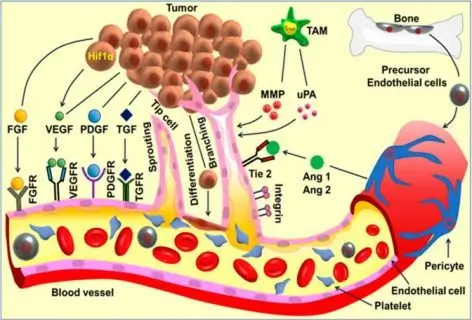
The angiogenesis pathway integrates multiple growth factors, endothelial signaling cascades, extracellular matrix remodeling enzymes, and perivascular cell recruitment mechanisms to coordinate vascular sprouting and maturation.
Angiogenesis pathway activity can be efficiently assessed by measuring gene expression of pro-angiogenic factors, vascular regulators, and downstream signaling biomarkers.
These markers reflect endothelial activation, matrix remodeling, and vessel maturation.
Core mechanisms of the angiogenesis pathway
Sprouting angiogenesis
Sprouting angiogenesis is initiated when endothelial cells respond to angiogenic signals such as VEGF.
Key steps include:
Activation of endothelial tip cells
Migration toward angiogenic gradients
Proliferation of stalk cells
Lumen formation and vessel elongation
This mechanism is predominant in tumor vascularization and wound repair.
Intussusceptive angiogenesis
Intussusceptive (splitting) angiogenesis occurs when existing vessels divide through the formation of intraluminal tissue pillars.
This mechanism:
Requires less endothelial proliferation
Allows rapid vascular remodeling
Contributes to vascular adaptation in physiological and pathological contexts
Major signaling pathways regulating angiogenesis
VEGF signaling pathway
VEGF is the primary pro-angiogenic driver.
VEGF binding to VEGFR-1 and VEGFR-2 activates:
PI3K-AKT (cell survival)
MAPK (proliferation)
eNOS signaling (vascular permeability)
VEGF signaling is a major therapeutic target in oncology.
PDGF signaling pathway
PDGF regulates vessel maturation by recruiting pericytes and stabilizing newly formed vessels.
It ensures vascular integrity and structural organization.
Angiopoietin-Tie signaling
Ang1 stabilizes vessels through Tie2 activation
Ang2 promotes vessel destabilization, enabling sprouting in the presence of VEGF
FGF signaling
FGF2 stimulates endothelial proliferation and plays a role in tissue repair and regenerative angiogenesis.
Angiogenesis pathway in cancer
Tumors exploit the angiogenesis pathway to sustain growth and metastasis.
Tumor hypoxia induces VEGF production, leading to:
Abnormal and leaky vasculature
Enhanced tumor cell dissemination
Increased resistance to chemotherapy
Immune microenvironment modulation
Anti-angiogenic therapies aim to disrupt this vascular supply.
Clinical and therapeutic relevance
Angiogenesis biomarkers are used to:
Monitor tumor progression
Assess treatment response
Develop anti-angiogenic therapies
Evaluate vascular remodeling in chronic diseases
Common anti-angiogenic strategies include:
VEGF inhibitors
Tyrosine kinase inhibitors
Anti-angiogenic antibodies
Why study the angiogenesis pathway with AnyGenes®?
At AnyGenes®, we provide high-performance qPCR arrays and customizable SignArrays® dedicated to angiogenesis pathway analysis.
Our solutions enable researchers to:
Quantify pro-angiogenic and anti-angiogenic gene signatures
The angiogenesis pathway is a molecular signaling network that regulates the formation of new blood vessels from existing vasculature through coordinated activation of endothelial cells and growth factor signaling.
What triggers angiogenesis?
Angiogenesis is primarily triggered by hypoxia and growth factors such as VEGF, FGF, and PDGF, which stimulate endothelial cell migration, proliferation, and survival.
Why is the angiogenesis pathway important in cancer?
Tumors activate the angiogenesis pathway to secure oxygen and nutrient supply, promoting tumor growth, metastasis, and resistance to therapy.
What are key angiogenesis biomarkers?
Key biomarkers include VEGFA, VEGFR2, FGF2, PDGFB, ANGPT2, MMPs, and endothelial markers such as CD31.
How can angiogenesis pathway activity be analyzed?
Angiogenesis pathway activity can be analyzed by measuring expression of angiogenic growth factors, receptors, and downstream signaling genes using targeted gene expression tools such as qPCR pathway arrays.
Angiogenesis signaling pathway biomarker list
You can check the biomarker list included in this pathway, see below:
3. Mukherjee A, et al. Recent Advancements of Nanomedicine towards Antiangiogenic Therapy in Cancer. Int J Mol Sci. (2020);21(2):455.
4. Braile M, et al. VEGF-A in Cardiomyocytes and Heart Diseases. Int J Mol Sci. (2020);21(15):5294.
5. Lee HJ, et al. Angiogenesis in Chronic Inflammatory Skin Disorders. Int J Mol Sci. 2021 Nov 7;22(21):12035.
6. Loizzi V, et al. Biological Pathways Involved in Tumor Angiogenesis and Bevacizumab Based Anti-Angiogenic Therapy with Special References to Ovarian Cancer. Int J Mol Sci. (2017)14;18(9):1967.
Need pricing information or distributor details?
For quotations, product information, or project discussions, please contact our team at
[email protected].