Hi, Continue visiting your profile
user

Login

Email

Password

Create account
Forget password
AnyGenes
  • email login

Biomarker validation services for targeted gene expression analysis

AnyGenes® provides biomarker validation services using targeted qPCR, pathway-focused SignArrays® and gene expression analysis to investigate candidate biomarkers identified through transcriptomic studies, screening, scientific literature or exploratory research.

From assay selection to customized qPCR panels and data analysis, our scientific team can help define a focused validation strategy adapted to your research question, samples and genes of interest.

Targeted qPCR validation Customized qPCR panels Gene expression analysis
AnyGenes® biomarker validation services using targeted qPCR and gene expression analysis

Explore complementary biomarker research services

Targeted biomarker validation can complement in vitro drug-response studies, DNA methylation analysis or molecular data analysis depending on the biological question, available data and stage of the research project.

Biomarker validation services: from candidate selection to targeted qPCR validation

Biomarker research often starts with a broad set of potential candidates. The next step is to prioritize biologically relevant targets and evaluate them with a focused assay in the experimental context of interest.

Candidate identification

Potential biomarkers can emerge from transcriptomic datasets, screening experiments, pathway analyses, scientific literature or other exploratory research.

Candidate prioritization

Select genes or transcripts based on biological relevance, observed expression patterns and the objectives of the study.

Targeted qPCR validation

Evaluate selected candidates using targeted qPCR assays or customized gene expression panels across relevant samples and experimental conditions.

Scientific context: qPCR-based validation can support experimental confirmation of transcript-level biomarker candidates under defined conditions. It does not, by itself, establish clinical validity or clinical utility.

A targeted qPCR workflow for biomarker validation

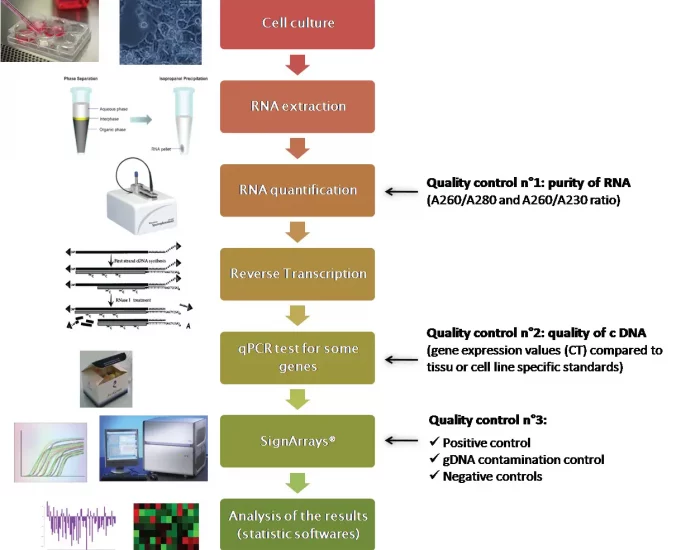
Biomarker validation projects can start from different sample types, candidate genes and levels of experimental evidence. The qPCR workflow can therefore be adapted to the available biological material, selected targets and objectives of the study.

01

Define the research objective

Clarify the biological question, experimental groups, candidate biomarkers and the comparisons required for targeted validation.

02

Select assays or design a custom panel

Select validated primer sets, an existing SignArray® or a customized qPCR panel containing the genes relevant to the project.

03

Review samples and RNA requirements

Evaluate the available biological material and RNA requirements before defining the reverse transcription and amplification strategy.

04

Measure targeted gene expression

Quantify selected transcripts by real-time PCR under defined experimental conditions using the selected assays or panel.

05

Analyze and interpret the data

Normalize qPCR data using appropriate reference genes, compare experimental groups and generate structured results for biological interpretation.

Project-adapted workflow: not every biomarker validation project requires the same starting point or experimental sequence. The strategy can be adapted to existing RNA, previously generated transcriptomic data, selected candidate genes or an established gene signature.

AnyGenes has developed robust procedures for the analysis of gene expression by qPCR arrays specific to any signaling pathways, with its high-throughput molecular platform.

qPCR technologies supporting targeted biomarker validation

The appropriate qPCR setup depends on the number of targets, available RNA, sample characteristics and experimental design. AnyGenes® offers complementary tools that can be combined within a focused gene expression workflow.
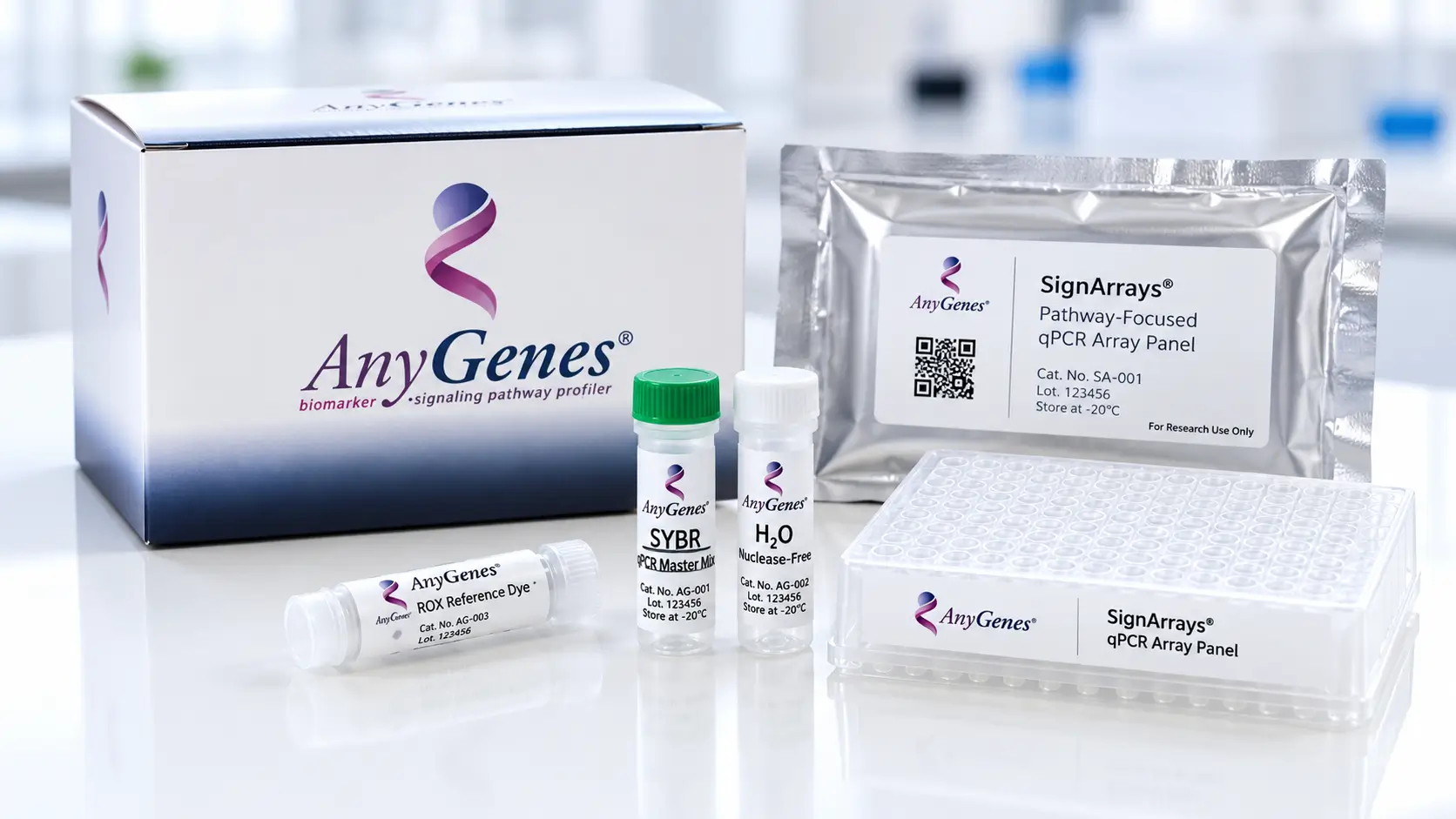
SignArrays® pathway-focused qPCR arrays for targeted biomarker and gene expression analysis

SignArrays® pathway-focused qPCR arrays

Analyze groups of genes associated with selected signaling pathways, biological processes or candidate molecular signatures using pathway-focused qPCR panels.

Explore SignArrays®
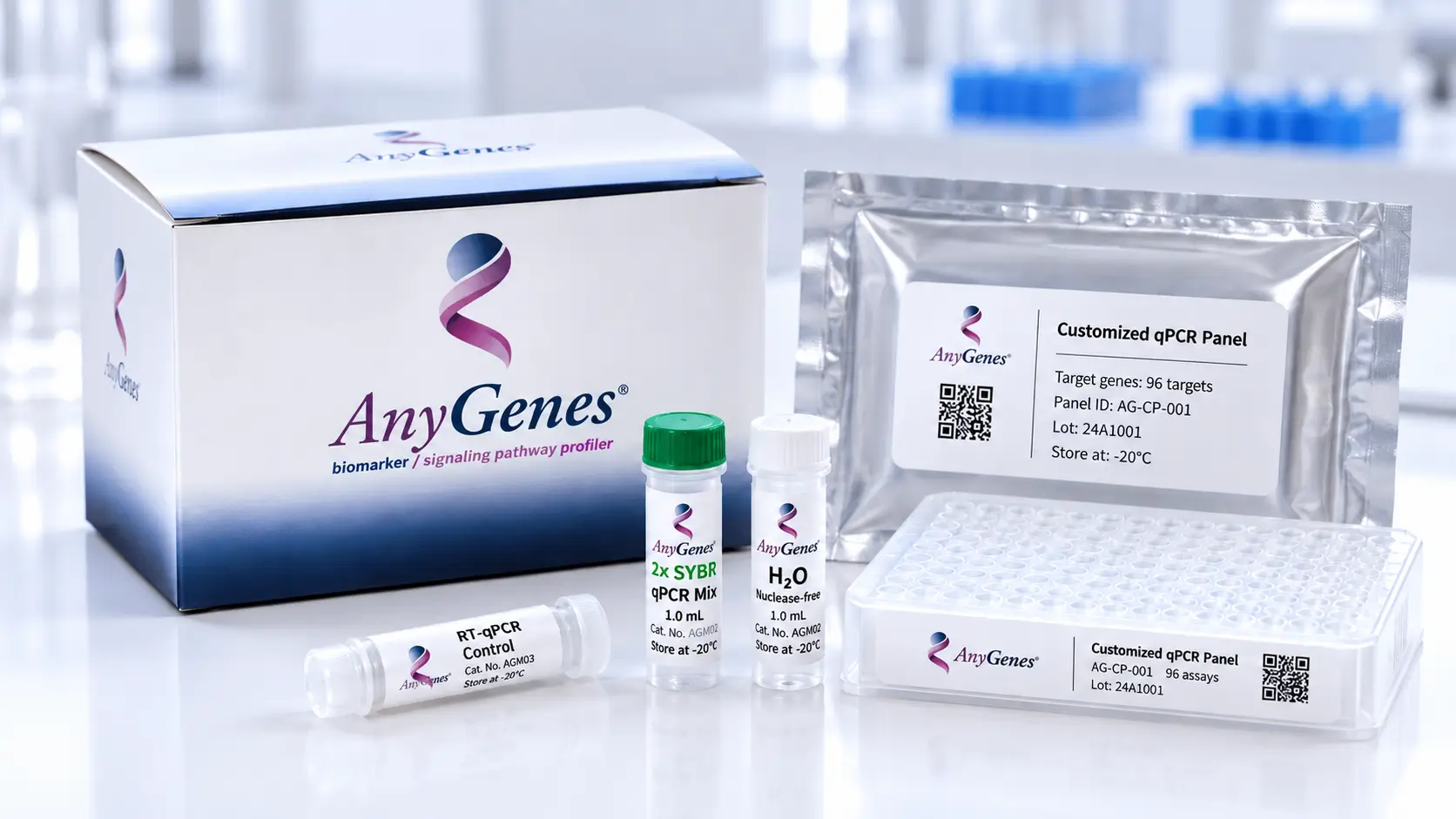
Customized qPCR panels for targeted biomarker gene expression analysis

Customized qPCR panels

Build a focused panel around selected genes identified through transcriptomic studies, experimental screening or an established biomarker strategy.

Request a personalized SignArray®
Validated qPCR primer sets for targeted biomarker analysis

Validated qPCR primers

Use experimentally evaluated primer sets for individual gene targets or integrate selected assays into a customized qPCR panel.

Explore validated qPCR primers
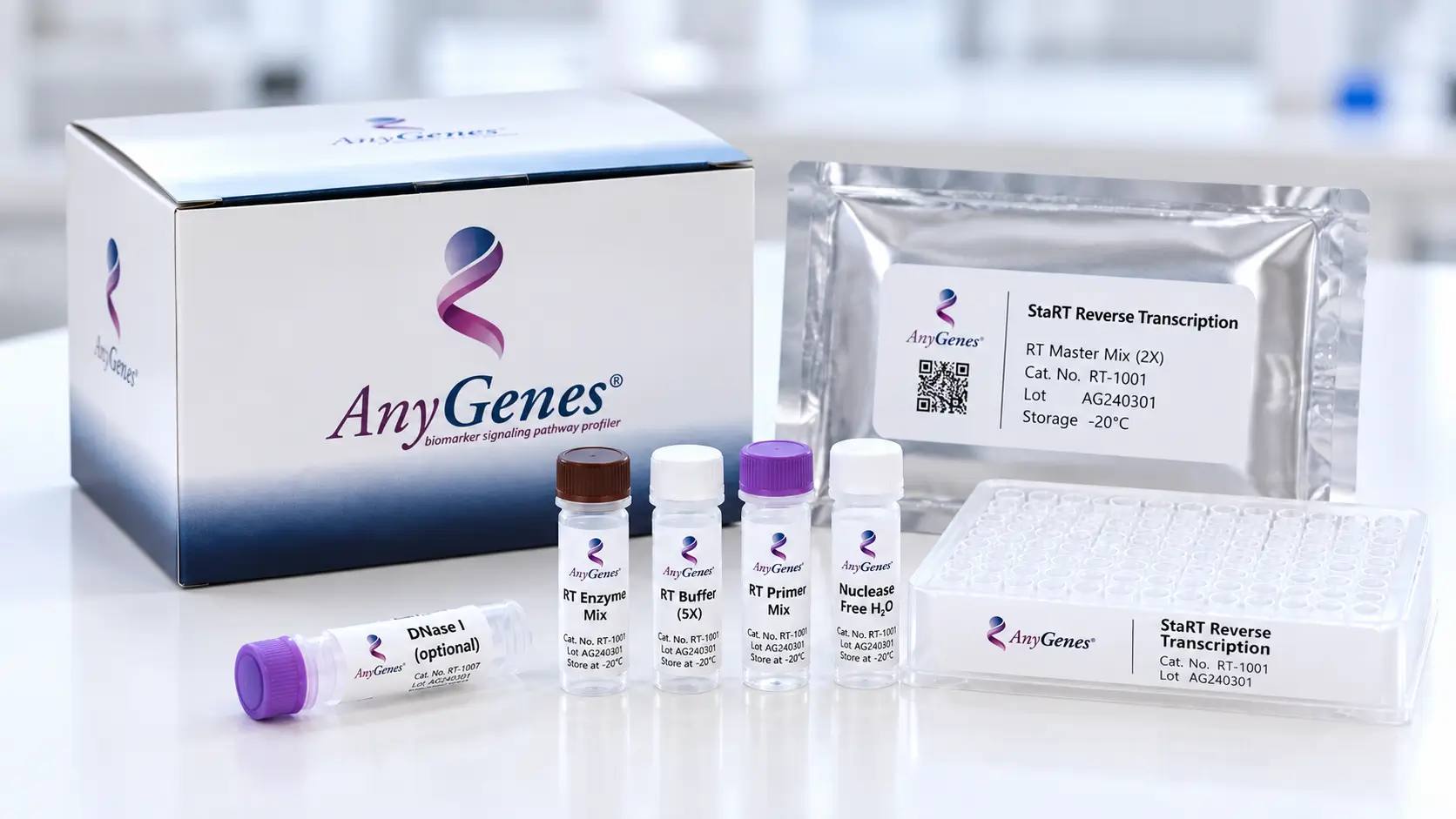
StaRT Reverse Transcription Kit for targeted qPCR gene expression workflows

StaRT Reverse Transcription

Convert RNA into cDNA before targeted qPCR analysis using a reverse transcription workflow designed for downstream gene expression studies.

Explore StaRT Reverse Transcription
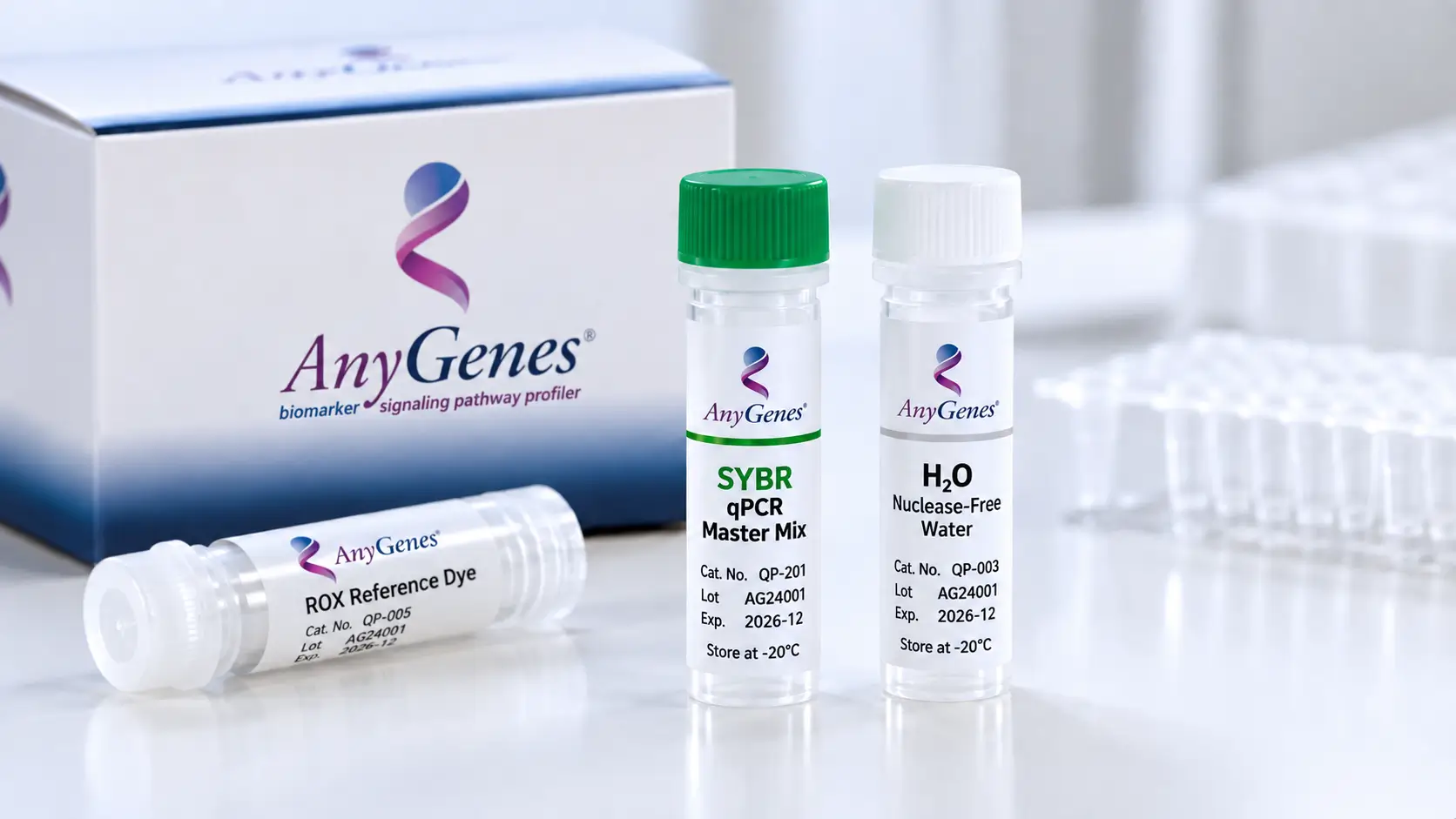
Perfect Master Mixes for targeted real-time qPCR analysis

Perfect Master Mixes

qPCR Master Mix formulations can be combined with validated assays and SignArrays® in targeted real-time PCR workflows.

Explore qPCR Master Mixes

SpeAmp® pre-amplification for low-input targeted qPCR studies

SpeAmp® pre-amplification

When RNA input is limited or selected transcripts are present at low abundance, pre-amplification can be considered before targeted qPCR analysis according to sample and assay requirements.

Explore SpeAmp®

Research applications for targeted biomarker validation

Targeted gene expression analysis can support biomarker research across different experimental contexts. The most appropriate validation strategy depends on the biological question, candidate genes, available samples and experimental model.

Cancer biology and treatment response

Investigate candidate genes associated with tumor biology, proliferation, apoptosis, invasion, immune-related responses or transcriptional changes observed after experimental treatment.

Inflammation and immune response

Evaluate selected inflammatory mediators, cytokine-related genes and immune-associated expression patterns under defined experimental conditions.

Cardiovascular and pulmonary research

Examine candidate markers related to vascular biology, endothelial function, cardiac remodeling or pulmonary experimental models.

Neurobiology and cellular stress

Investigate targeted expression patterns associated with neuroinflammation, oxidative stress, neuronal responses and cell-survival pathways.

Drug-response research

Compare targeted transcriptional responses across treatment conditions to investigate molecular changes and candidate signatures associated with experimental compound exposure.

RNA-seq candidate follow-up

Select candidate genes identified through RNA-seq and examine their expression using individual qPCR assays or customized targeted panels in relevant samples and conditions.

Samples and project requirements for targeted qPCR biomarker validation

A targeted biomarker validation strategy should take into account the biological material, RNA availability, species, selected genes and experimental comparisons before the qPCR workflow is defined.

Biological material

Projects may start from tissues, cultured cell lines or extracted RNA, depending on the biological question, material available and downstream analysis requirements.

Research species

qPCR assays are available for commonly studied species including human, mouse, rat and pig. Additional options can be discussed depending on the target gene and assay availability.

Limited RNA input

When RNA quantity is limited or selected transcripts are present at low abundance, a pre-amplification strategy such as SpeAmp® may be considered before targeted qPCR analysis.

Project-specific design

Panel composition, assay selection and qPCR format can be adapted to the genes of interest, biological pathways, sample constraints, experimental groups and objectives of the study.

Published research using AnyGenes® gene expression technologies

AnyGenes® gene expression technologies have been incorporated into peer-reviewed research across oncology, cardiovascular and pulmonary research, transcriptomics, lncRNA analysis and biomarker-oriented studies. The examples below illustrate how targeted qPCR approaches have been integrated into published experimental workflows.

Nature Communications · 2021

Transcriptomic candidate validation

Selected transcriptomic findings associated with Cornelia de Lange syndrome were investigated using customized AnyGenes® qPCR panels.

Technology used:
Customized gene expression qPCR panels

View publication
Biochemical Pharmacology · 2026

lncRNA profiling and treatment response

Targeted lncRNA profiling was incorporated into research examining the transition from methotrexate response to resistance in colorectal cancer cells.

Technologies used:
Human LncRNA and Cancer SignArray® · StaRT Reverse Transcription Kit · SignArray® analysis software

View publication
Respiratory Research · 2025

Endothelial gene expression profiling

A pathway-focused qPCR approach was used to investigate gene expression associated with endothelial dysfunction in pulmonary arterial hypertension.

Technologies used:
Endothelial Dysfunction SignArray® · StaRT Reverse Transcription Kit · Perfect Master Mix

View publication

Research context: these publications illustrate the use of AnyGenes® technologies within peer-reviewed experimental studies. They do not necessarily indicate that the complete study was performed as an AnyGenes® service.

Frequently asked questions about biomarker validation services

Common questions about targeted qPCR, candidate biomarkers, customized panels, sample requirements and biomarker validation workflows.

What are biomarker validation services?

Biomarker validation services help researchers evaluate selected candidate biomarkers in a defined experimental context. For transcript-level candidates, targeted qPCR can be used to measure selected genes across relevant samples, groups or experimental conditions. This type of experimental validation does not, by itself, establish clinical validity or clinical utility.

What is the difference between biomarker discovery and biomarker validation?

Biomarker discovery aims to identify potential candidates, often from transcriptomic datasets, screening experiments, pathway analysis or exploratory research. Biomarker validation focuses on a selected subset of candidates and evaluates them using targeted experimental approaches such as qPCR.

Can qPCR be used to validate candidate biomarkers identified by RNA-seq?

Yes. Selected transcripts identified through RNA-seq can be examined using targeted qPCR assays or customized gene expression panels. This provides a focused follow-up measurement of selected transcript-level findings in defined samples or experimental conditions.

Can AnyGenes® design a custom qPCR panel for my biomarker candidates?

Yes. Personalized SignArrays® can be designed around selected genes, biological pathways, research species and project objectives, depending on assay availability. This approach can be useful when several candidate biomarkers need to be analyzed within the same targeted qPCR panel.

Which sample types can be used for biomarker validation?

Biomarker validation projects can involve tissues, cultured cell lines or extracted RNA. The appropriate workflow depends on the available biological material, RNA characteristics, selected genes and experimental design.

What if only a small amount of RNA is available?

When RNA input is limited or selected transcripts are present at low abundance, a pre-amplification step such as SpeAmp® may be considered before targeted qPCR analysis, depending on the sample and assay requirements.

Need a targeted qPCR strategy for your biomarker project?

Whether you are prioritizing candidate genes, following up RNA-seq findings, investigating a biomarker signature or developing a customized qPCR panel, our scientific team can help define an approach suited to your samples, targets and research objectives.