RNA-seq data analysis – bioinformatics workflow demo
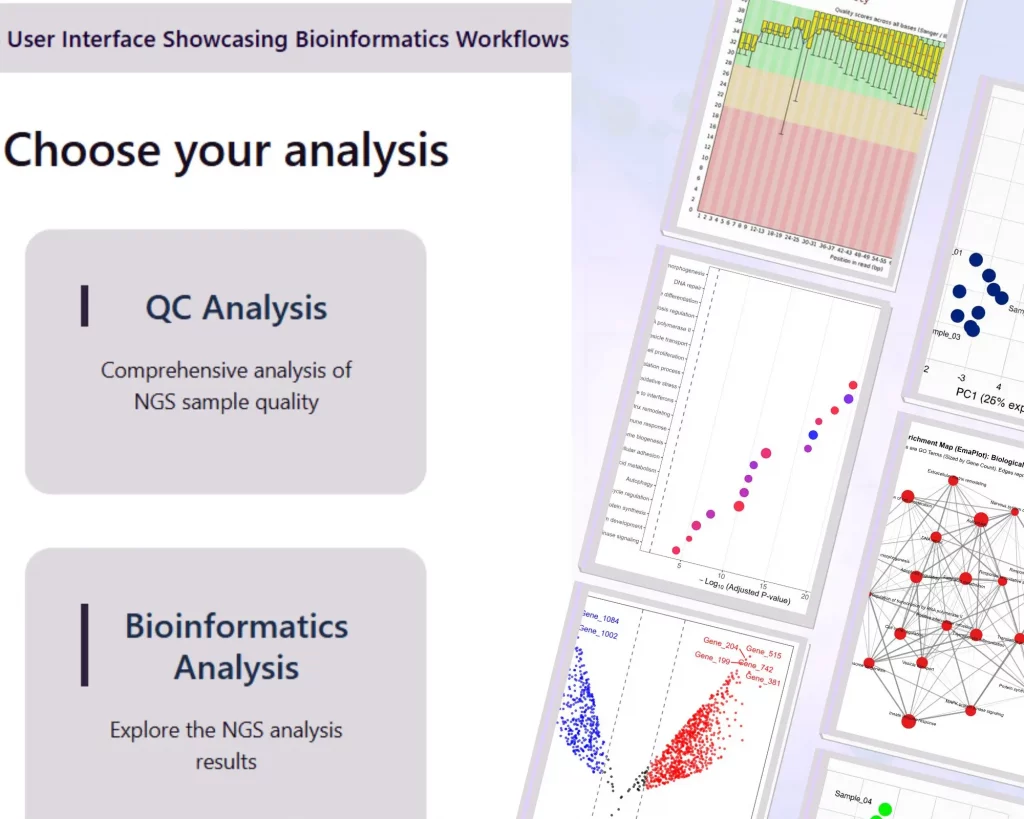
This public demo showcases a complete RNA-seq data analysis service performed by our expert bioinformatics team using standardized and reproducible workflows. From sequencing quality controland alignment to differential expression and transcriptomic insights, the demo illustrates how raw Illumina NGS data is processed to deliver clear, actionable, and publication-ready results.
The example results presented below reflect the analyses, visualizations, and reports delivered to our clients as part of our transcriptomic bioinformatics services. They are designed to help researchers evaluate data quality, identify relevant gene expression changes, and prepare results for downstream validation or publication.
For projects requiring specific comparisons, custom visualizations, pathway-focused interpretation, or qPCR validation, our bioinformatics team can adapt the analysis workflow to your research objectives.
What you can explore in this RNA-seq bioinformatics demo
In this RNA-seq data analysis demo, you can explore representative outputs such as:
NGS and RNA-seq quality control metrics to assess sequencing and sample quality
Read alignment and mapping overview to evaluate data processing performance
Transcriptome-wide gene expression analysis to compare expression profiles across conditions
Differential expression analysis to identify upregulated and downregulated genes
Visual outputs, including plots and summary tables, to support interpretation
Standardized bioinformatics reporting designed for research, validation, and publication workflows
The demo provides a practical overview of the reporting level and data visualization formats researchers can expect when working with AnyGenes on RNA-seq bioinformatics projects.
Standardized transcriptomic analysis is essential to ensure reproducibility, comparability, and biological relevance across transcriptomic studies.
By applying consistent quality control steps, robust alignment strategies, and statistically appropriate differential expression analysis, bioinformatics workflows help reduce technical bias and support confident interpretation of gene expression changes.
This is particularly important for biomarker discovery, pathway analysis, translational research, and preclinical or clinical studies where RNA-seq results must be reliable, interpretable, and suitable for downstream validation.
To strengthen RNA-seq findings, AnyGenes also provides complementary qPCR array validation, a targeted gene expression approach commonly used to confirm selected genes, biological pathways, or biomarker signatures identified through RNA-seq analysis.
About AnyGenes’ RNA-seq and qPCR expertise
AnyGenes has more than 20 years of experience in transcriptomics, RNA expression analysis, qPCR assay development, and cellular signaling pathway profiling. Our team supports academic, translational, and biomarker-driven research projects by delivering RNA-seq data analysis results that are clear, reproducible, and ready for downstream interpretation or validation.
By combining bioinformatics expertise with targeted qPCR array validation, AnyGenes helps researchers move from high-throughput transcriptomic discovery to focused gene expression confirmation.
Explore the demo results to see how AnyGenes presents RNA-seq quality control, differential expression, and bioinformatics reporting.
Frequently Asked Questions About RNA-seq Data Analysis
What does RNA-seq data analysis include?
RNA-seq data analysis typically includes sequencing quality control, read alignment or mapping, gene expression quantification, differential expression analysis, visualization of results, and biological interpretation. Depending on the project, additional analyses may include pathway enrichment, clustering, biomarker prioritization, or qPCR validation.
Why is quality control important in RNA-seq analysis?
Quality control helps identify technical issues that may affect RNA-seq results, such as low sequencing quality, poor mapping rates, sample outliers, or inconsistent library performance. Reliable quality control is essential before interpreting differential gene expression results.
How can RNA-seq results be validated?
RNA-seq results are commonly validated using targeted gene expression methods such as RT-qPCR or qPCR arrays. AnyGenes supports RNA-seq validation using qPCR array technologies designed to confirm selected genes, pathways, or biomarker signatures.