AnyGenes® DiLysis™ reagents are designed to support direct lysis qPCR workflows, helping researchers prepare cell lysates for downstream RT-qPCR and targeted gene expression analysis without conventional RNA extraction.
This extraction-free workflow is particularly useful when working with single-cell samples, rare cell populations, limited biological material or low-input experiments where sample handling and RNA loss must be carefully controlled.
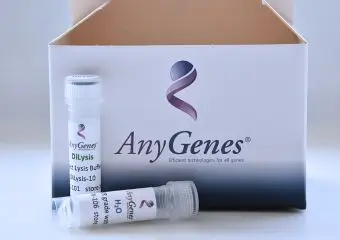
DiLysis™ supports extraction-free preparation of cell lysates before RT-qPCR, helping simplify workflows for rare cells, small cell populations and low-input gene expression analysis.
Designed to lyse cells directly and reduce the need for conventional RNA extraction steps before RT-qPCR analysis.
Can support workflows involving limited biological material, including applications using approximately 10–100 cells depending on sample type and experimental design.
Helps minimize manipulation steps that can contribute to RNA loss, variability or contamination in low-input workflows.
Cell lysates can be used in adapted reverse transcription and qPCR workflows for targeted gene expression analysis.
Can be combined with SpeAmp® cDNA preamplification when target abundance or sample input is limited.
Supports targeted pathway-focused qPCR strategies when combined with suitable preamplification and SignArrays® panels.
Conventional RNA extraction can be challenging when starting material is very limited. Multiple handling steps may increase sample loss, introduce variability or make it difficult to work with rare cells, sorted populations or small biological samples.
DiLysis™ supports a simplified direct lysis qPCR workflow by preparing cell lysates that can be used for reverse transcription and downstream targeted qPCR analysis. This approach helps streamline sample preparation while keeping the workflow focused on selected genes, pathways or biomarker panels.
Cells are isolated, sorted or collected according to the biological question and sample type.
Cells are lysed directly using DiLysis™ reagents, reducing handling before reverse transcription.
Lysates are processed through adapted reverse transcription, optional SpeAmp® preamplification and targeted qPCR analysis.
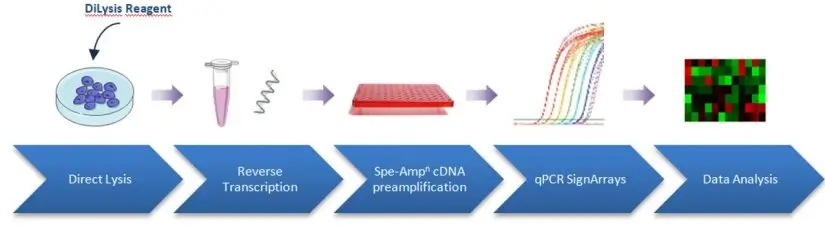
DiLysis™ supports extraction-free RT-qPCR workflows for low-input samples and targeted gene expression analysis. The workflow below illustrates how direct lysis can be combined with reverse transcription, SpeAmp® cDNA preamplification, qPCR SignArrays® and data analysis.
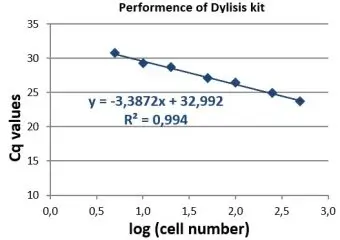
The selected validation data support the use of DiLysis™ in low cell number workflows where direct sample preparation is required before RT-qPCR analysis.
DiLysis™ reagents are designed to simplify sample preparation before RT-qPCR, especially when working with limited cellular material.
Reduces extraction-related steps before reverse transcription and qPCR analysis.
Helps limit manual manipulation, which is important in low cell number experiments.
Suitable for workflows involving single-cell material, rare cells or small cell populations.
For very low-input samples or weakly expressed targets, DiLysis™ can be combined with SpeAmp® cDNA preamplification before downstream qPCR or SignArrays® analysis.
DiLysis™ prepares lysates from limited cellular material without conventional RNA extraction.
SpeAmp® supports targeted cDNA preamplification when input material or target abundance is limited.
Selected targets can then be analyzed using qPCR assays or pathway-focused SignArrays® panels.
DiLysis™ reagents support low-input RT-qPCR workflows where sample quantity, cell number or sample preparation time can limit conventional RNA extraction.
Supports targeted gene expression analysis from individual cells or very small cell groups.
Useful for sorted cells, enriched populations or limited biological material.
Helps prepare samples for targeted RT-qPCR when RNA input is limited.
Can support pathway-focused workflows when combined with SpeAmp® and SignArrays® panels.
Supports targeted analysis of selected biomarkers in limited or rare sample contexts.
Can support targeted qPCR follow-up of selected transcriptomic results when remaining material is limited.
Direct lysis and low-input RT-qPCR approaches have been described in peer-reviewed scientific literature for single-cell and small-sample gene expression workflows. These studies illustrate the relevance of reducing sample handling and adapting reverse transcription, preamplification and qPCR conditions when working with limited cellular material.
This study describes direct cell lysis as an approach for single-cell gene expression profiling by real-time PCR, highlighting the importance of RNA accessibility, RNA integrity and compatibility with downstream enzymatic reactions.
This Scientific Reports article evaluates optimized direct lysis methods for gene expression studies using low cell numbers, a context closely aligned with low-input RT-qPCR workflows.
This tutorial reviews key steps in single-cell RT-qPCR workflows, including cell collection, lysis, reverse transcription, preamplification, qPCR and data analysis.
DiLysis™ reagents are available in different reaction formats. Contact AnyGenes® for quotations, product information, distributor details or technical guidance.
| Catalog Reference | Number of Reactions | Price |
|---|---|---|
AnyGenes® can help you define the most appropriate direct lysis, reverse transcription, preamplification and qPCR strategy according to your cell type, input level, target genes and downstream analysis.
Whether your project involves single-cell analysis, rare cells, low-input samples, pathway profiling or biomarker validation, our team can help you build a targeted workflow.
Direct lysis qPCR reagents are used to lyse cells directly before RT-qPCR, reducing or eliminating conventional RNA extraction steps in adapted gene expression workflows.
Yes. DiLysis™ reagents can support single-cell and low cell number RT-qPCR workflows, including applications involving approximately 10–100 cells depending on sample type, target abundance and experimental design.
Direct lysis can simplify sample preparation, reduce handling steps and help limit RNA loss, which is especially important when starting material is rare or limited.
Yes. DiLysis™ can be combined with SpeAmp® cDNA preamplification when RNA input is limited or when selected target genes are weakly expressed.
DiLysis™ can be integrated into workflows using SpeAmp® preamplification and SignArrays® qPCR panels for targeted gene expression and pathway-focused analysis.
Yes. AnyGenes® can help adapt the workflow according to cell type, sample input, reverse transcription strategy, preamplification needs, target genes and qPCR conditions.
Visit the AnyGenes® Help & FAQ section for detailed information about our products, services, ordering process and technical support.
Visit Help & FAQ